Fish cremation and aftercare, from a prized koi to a tiny betta
Koi can live 30-40 years[1], and a small tank fish can be just as loved. We'll help you choose a respectful goodbye that fits your fish's size, including honest advice when cremation returns very little.
- Straight answers on how much ash a fish leaves
- Options for pond koi and small aquarium fish
- Kinder alternatives to flushing, explained simply
If your fish has just died
What to do in the first hour after a fish dies
First, make sure. A fish lying still on the bottom can be stunned, chilled or very weak rather than gone. Watch the gills for a full minute and look for any movement of the fins or mouth. If nothing moves and the eyes have clouded, your fish has died.
Lift your fish out of the water with a net as soon as you're sure. A body left in a tank or pond starts to break down quickly in warm water, and that releases ammonia that can harm the fish still living there. Rest your fish on a paper towel or a soft cloth while you think, and wash your hands afterwards: the CDC's advice for fish owners explains that tank water can carry germs that make people ill. Our step-by-step article on what to do when your fish dies covers the rest of that first hour.
- Small aquarium fish: wrap them in a damp paper towel, seal them in a small bag or tub and put it in the freezer. That buys you days or weeks to decide calmly.
- Larger goldfish and koi: wrap in a towel, then a sealed bag, and keep in a chest freezer or a cooler packed with ice until you have a plan.
- If you want to know why they died: chill rather than freeze, and call an aquatic vet the same day. Freezing damages the tissue a vet needs to examine.
The question nobody likes to ask
Why flushing a fish isn't the kind option it seems
Flushing feels quick and private, and plenty of us grew up seeing it done. But a toilet isn't a burial. Fish often carry parasites and bacteria that wild fish have never met, and not every drain leads to full treatment. In many older cities, heavy rain sends sewage overflow straight into rivers. We explain the rest in why you shouldn't flush a dead fish.
Live fish are the bigger worry. A goldfish usually grows 5 to 8 inches, but released into the wild one can approach 2 feet and 6 pounds, crowding out native species. That's why Minnesota made releasing them illegal, and the Minnesota DNR's goldfish page says owners should never release[2] unwanted goldfish into lakes, ponds or drains.
Before reading about it, what did you think happens to a flushed fish?
Tap an answer to vote and see how others answered. Anonymous.
There's a gentler side to this too. Children who watch a fish disappear down the toilet sometimes find it more upsetting than a small burial or a proper goodbye. Our page on short rituals after an aquarium companion dies has simple ideas that take ten minutes.
The honest part
How much ash a fish leaves, from koi to betta
Cremated remains are mostly bone mineral. Pets usually leave about 3-5% of body weight[3], and fish can come in at the low end because their bodies are mostly water and their skeletons are fine. So the size of your fish decides whether cremation gives you something to keep.
| Fish | Typical adult weight | Likely ashes returned |
|---|---|---|
| Large koi (24 inches and up) | 8 to 20 lb | About 4 oz to 1 lb, enough for a small urn |
| Pond goldfish or small koi | 1 to 3 lb | About half an ounce to 2 oz, a keepsake vial |
| Fancy goldfish or oscar | 4 to 16 oz | A teaspoon or less |
| Betta, guppy or tetra | A few grams | Possibly nothing you could collect |
If your fish is tiny, a good provider will tell you plainly that there may be nothing separate to return. Some will return a token of the chamber ash with a certificate; others will suggest a different memorial. Our guide to symbolic ash yields for fish and koi explains the difference, and the ashes weight estimator runs the numbers for your fish.
Prices
What fish cremation costs, and why small doesn't mean cheap
Almost every fish falls into the smallest weight band on a price list. In the US, CareCredit's guide lists pets up to 30 lb this way: communal $45-75; private $100-175[4]. A minimum exists because running the chamber costs much the same whether the animal weighs two ounces or twenty pounds. Our calculation from those price bands shows the effect: private cremation works out to about $9.2 per pound for a 15 lb pet, falling to about $4 per pound for a 100 lb dog[5]. Spread over a 2 lb koi, the per-pound figure is far higher again.
Things that can push the total up: collection from your home, a decorative urn or glass keepsake, and a witnessed cremation. If you're unsure whether the result is worth it for a small fish, ask the provider before you pay how much they expect to return.

Free tool
Cremation cost calculator
Estimate a realistic price range for your pet's size, location and the type of cremation.
Cost is a fair worry. When one US study asked pet owners how they felt about paying for aftercare, 61%[6] rated the cost as a concern. For a line-by-line look at quotes, read fish cremation costs and how to compare written quotes.
Your choices
Cremation, burial or something else: matching the goodbye to your fish
For a large koi or long-lived goldfish, private cremation works well. You get a meaningful amount of ash for a small urn, a pond-side scattering or a pendant. Communal cremation costs less, and the ashes aren't returned.
For a small aquarium fish, many families choose a burial instead. A hole about a foot deep, well away from the pond and any vegetable beds, is enough for most small fish. A large planter with a new plant works if you rent or have no garden. Water cremation, also called aquamation, is another option some providers offer.
What would you choose for a fish you loved?
Tap an answer to vote and see how others answered. Anonymous.
Never bury a fish in or beside the pond itself, especially if you don't know why it died. Our services page explains each option in more detail, and the aftercare options comparison ranks them by what matters most to you.
Why koi loss hits hard
A koi can outlive a mortgage, so the grief is real
Koi keepers are often told their fish are "just fish". Yet a well-kept koi can be expected to live about 5.4x[7] as long as a typical goldfish, and many have been handed from one generation of a family to the next. Some cost more than a pedigree puppy.
223 years (disputed)[8]
Knowing that the Japan Nishikigoi Promotion Association has debunked the myth doesn't make a 30-year-old koi any less remarkable. If you've fed the same fish every morning for decades, its absence from the pond will be noticed. Our guide to pond-side markers after koi loss has ideas for marking that place.
A first loss
When a goldfish or betta was your child's first pet
For many children, a fish is the first pet they are responsible for, and so the first death they understand. It's tempting to swap in a lookalike overnight. Most child-development advice suggests the opposite: tell them the truth in simple words and let them help with the goodbye.
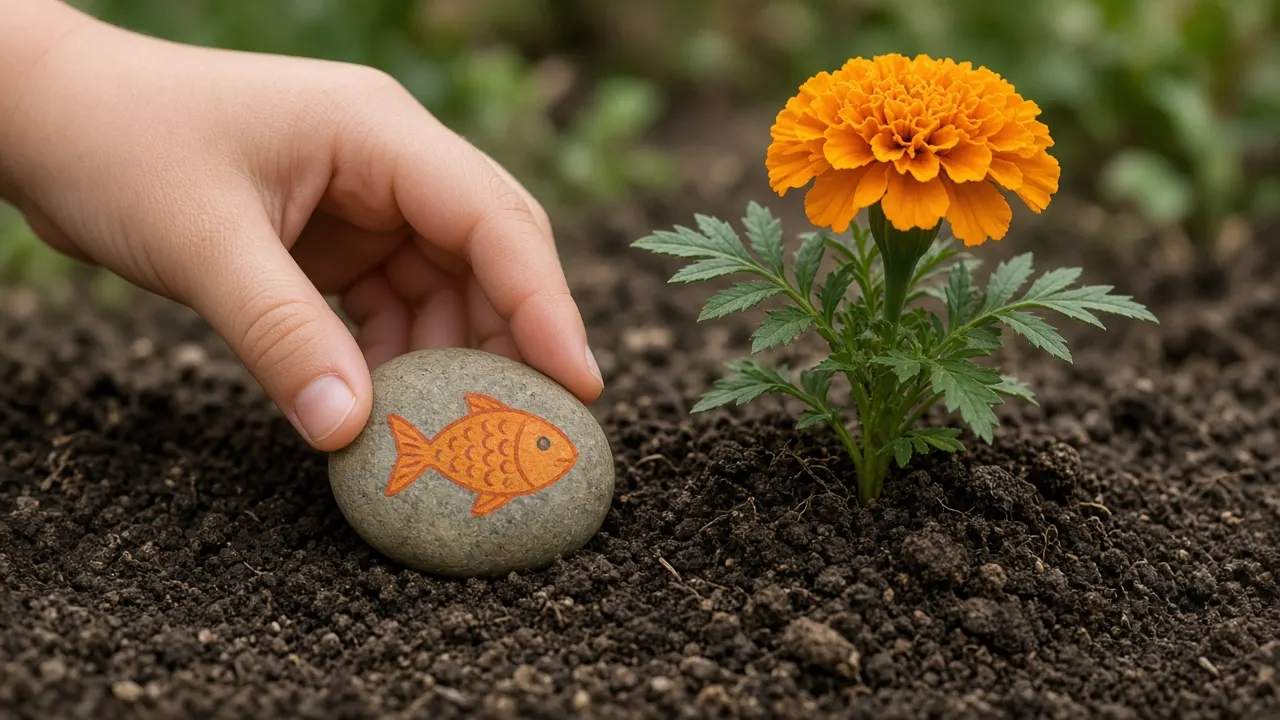
Small jobs help: drawing a picture to bury with the fish, choosing a stone, or picking a plant for the spot. Parents want support here. In a large UK survey, 93.4%[9] of parents wanted better guidance on helping children through pet loss.
If you'd like help finding a provider or working out a small memorial, tell us about your fish. For words that help adults as well as children, read our page on grief after losing a fish.

Reader polls
What would you choose?
Vote anonymously and see how other readers answered. The results are live counts from people who visit this site, so they show real opinions, not a scientific sample.
Which fish are you thinking about right now?
Tap an answer to vote and see how others answered. Anonymous.
Would you keep your fish in the freezer while you decide what to do?
Tap an answer to vote and see how others answered. Anonymous.
If you had to decide today, which aftercare would you choose for your pet?
Tap an answer to vote and see how others answered. Anonymous.

Free tools to help you plan
Ashes weight estimator
See roughly how much ash to expect back, by species and body weight.
Cremation cost calculator
Estimate a realistic price range for your pet's size, location and the type of cremation.

Aftercare options compared
Compare private, communal and water cremation with burial on cost, timing and what comes home.
Questions people ask
Can you actually cremate a fish?
Yes. Many pet crematories accept fish, and a large koi or pond goldfish is cremated much like any small pet. The limit is size: a betta, guppy or neon tetra weighs only a few grams and may leave no ash that can be separated and returned. Ask the provider what they expect to give back before you book.
Is it okay to flush a dead fish?
It's better not to. Fish can carry parasites and bacteria that shouldn't reach rivers, and not all wastewater is fully treated, especially during storms. Never flush a fish that might still be alive. Burying a small fish in the garden or a planter, or freezing it until you arrange cremation, is kinder and safer.
How long can I keep a dead fish in the freezer?
Sealed properly in a bag or tub, a fish can stay frozen for weeks or even months while you decide, which is useful if a crematory needs a few days to collect. Label the bag so no one gets a shock. If you want a vet to find out why your fish died, chill it in the fridge instead and call them quickly.
How much does it cost to cremate a koi?
In the US, most fish fall into the smallest weight band. CareCredit lists private cremation for pets up to 30 lb at about $100 to $175, with communal cremation lower. A very large koi may cost a little more, and home collection, urns and glass keepsakes are extra. Always ask for a written total.
Where should I bury a pet fish?
Choose a spot at least a foot deep, away from the pond, streams, wells and vegetable beds, so scavengers can't dig it up and nothing leaches into water. Wrap the fish in paper or cotton, not plastic. Check local rules if you rent, and don't bury a fish that died of an infectious disease near other fish.
What can I keep if my fish was too small to leave ashes?
Plenty. Families keep a favorite photo printed and framed, a painting, a plant grown over a garden burial, the tank's special ornament, or a gyotaku-style fish print made from a photo. Some crematories return a small token vial with a certificate. What matters is that the memorial feels like your fish.
Keep reading


Sources and our estimates
- [1] Nishikigoi (koi) typically live about 30 to 40 years depending on their environment. All Japan Nishikigoi Promotion Association - Ancient koi 'Hanako', 2024.
- [2] Minnesota DNR advises owners of unwanted goldfish to return them to a retailer, use a surrender event, rehome with hobbyists, or ask a veterinarian or pet retailer about humane disposal, never releasing them. Minnesota DNR - Goldfish (Carassius auratus) invasive species page.
- [3] Embrace notes cremated remains typically weigh about 3-5% of the pet's original body weight. Embrace Pet Insurance - Bury or Cremate Your Dog? Costs, Pros & Cons, 2025.
- [4] CareCredit's pet cremation guide lists US communal cremation at $45-$75 and private at $100-$175 for pets up to 30 lb. CareCredit (Synchrony) - How Much Does Pet Cremation Cost? (Sept 2023), 2023.
- [5] Private cremation cost per pound falls with size in the US: roughly $9.2/lb for a 15 lb pet, $4.2/lb at 60 lb and about $4.0/lb at 100 lb. Our estimate: band midpoint price / representative weight: 0-30 lb (midpoint $137.50 / 15 lb) = $9.17/lb; 51-70 lb ($250 / 60 lb) = $4.17/lb; over 90 lb ($400 / ~100 lb) = $4.00/lb. How we calculate.
- [6] 61% of US owners in the Cooney survey rated the cost of after-death body care as a concern (27.9% concerned, 33.1% very concerned). Cooney, Kogan, Brooks, Ellis - Pet Owners' Expectations for Pet End-of-Life Support and After-Death Body Care, Topics in Companion Animal Medicine (2020), 2020.
- [7] A koi (30-40 years) can be expected to live about 5.4 times as long as a typical goldfish (6-7 years). Our estimate: 35 / 6.5 (range midpoints). How we calculate.
- [8] The famous koi 'Hanako' was listed at 223 years old from scale rings, but the Japanese koi association now says the age is considered incorrect because koi scales form multiple ridges per year. All Japan Nishikigoi Promotion Association - Ancient koi 'Hanako', 1977.
- [9] 93.4% of parents in the RSPCA survey wanted better guidance on helping children through pet loss. RSPCA — Pet Loss Survey Results, 2026.
Get fish cremation options near you
Tell us what you need and where you are. We'll reply by email with clear options and prices so you can decide in your own time.